Prelude
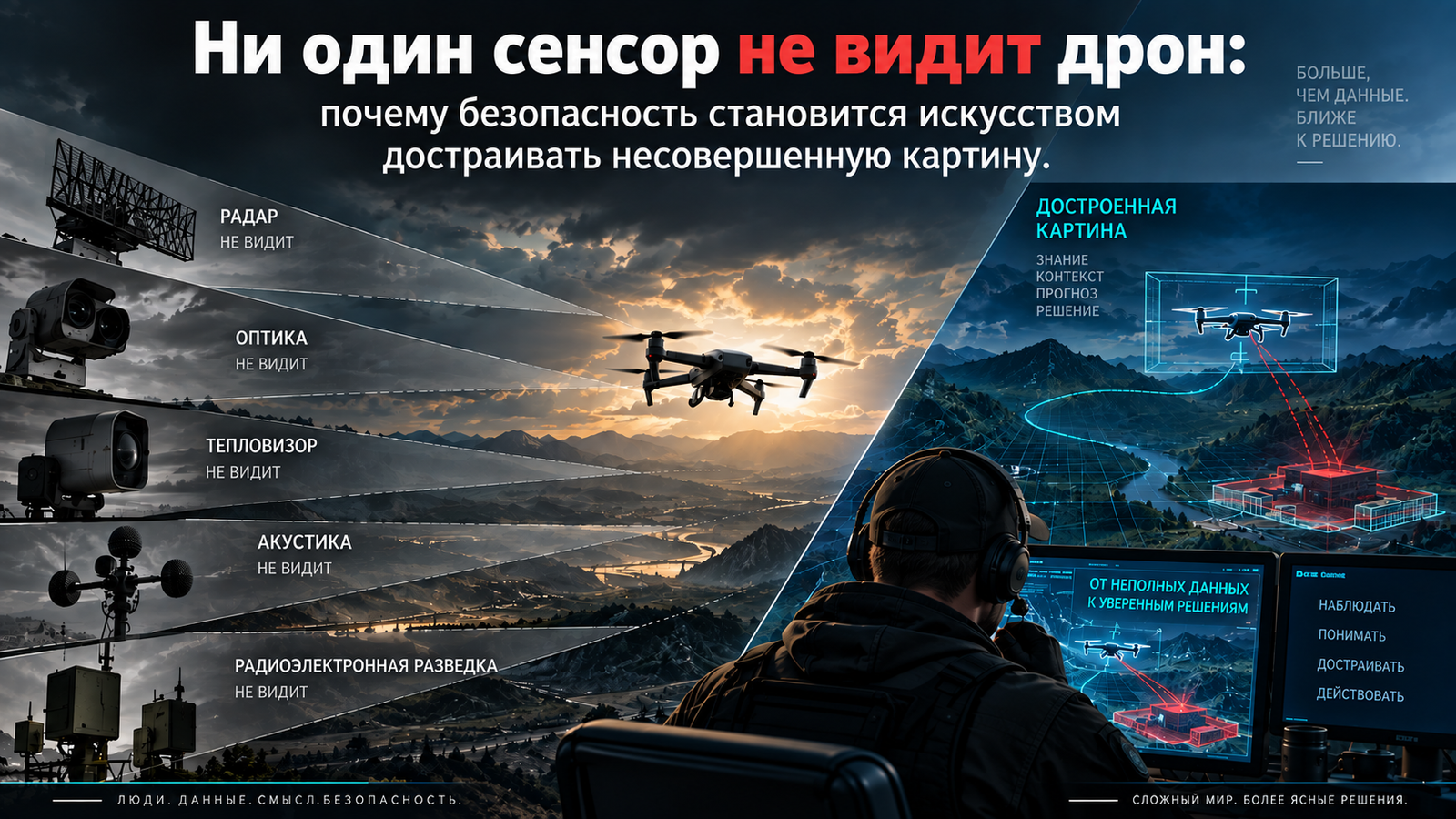
The XVIII Airborne Corps of the U.S. Army, on August 18, 2026, disclosed a series of counter-UAS trials. These exercises, staged between August 11 and 13 in Fayetteville, North Carolina, served as a precursor to the September Scarlet Dragon maneuver, embedded within a conference dedicated to the integration and strategic planning of such countermeasures. The roster of participants exceeded fifty entities: a fragmented consortium of sensor manufacturers, developers of command and control architectures, and architects of the elusive common operational picture. Yet, the true analytical locus resides not in the sheer volume of participants, but in the very framing of the objective. The military's pursuit was not for a singular, omnipotent sensor — a panacea for the aerial threat — but rather an intricate dissection: to discern the specific segment of the air picture each disparate asset could render, and, crucially, how these heterogeneous fragments might coalesce into a more comprehensive, albeit still imperfect, understanding.
This framing elevates the discourse beyond mere hardware selection for site defense. The contemporary challenge for surveillance architectures transcends mere target acquisition, for it is equally imperative to ascertain,that the system acutely understands its deficiencies, which of the unknowns is critical for effective decision-making, and which subsequent observation is most capable of precisely mitigating this critical uncertainty..
It is at this precise operational stratum that the imperative for an instrument crystallizes, an instrument we designate as the Situational Picture Reconstruction Matrix.
No sensor provides a holistic view of the target.
The same entity manifests distinctly across disparate observation modalities, each apprehending it through its inherent physical principle. For one sensor, a drone registers as a kinetic target; for another, it is an electromagnetic anomaly; for a third, a mere optical signature; for a fourth, an acoustic echo. Yet, to a computational system, it resolves into a data stream: a sequence of coordinates, velocities, vectors of change, and probabilistic assessments.
It follows that a sensor does not register the object itself, but merely the residual trace accessible to its specific mode of observation. Consequently, the inherent incompleteness of any device's output is not a casual flaw slated for remediation in a subsequent iteration, but rather an intrinsic characteristic of observation itself: for every sensor, in illuminating one facet of an entity, invariably casts the others into shadow.
2. From the Best Sensor to Superior System Design In prior installments, we have already posited that acquiring actionable operational data does not always necessitate the most expensive or most precise sensor. For instance, to ascertain an individual's urban coordinates, Garmin's precision suffices, not Leica's. Moreover, redundant accuracy can prove deleterious, for it introduces superfluous noise and obfuscates analysis. The sensor itself is less critical than its systemic integration and the subsequent data processing. This principle forms the bedrock of numerous effective operational strategies, from military operations to cybersecurity. Within the context of operational analytics and security, it dictates a focus on architecting resilient, adaptive, and efficient systems, rather than merely chasing the ideal sensor. It is precisely here that systemic thinking methodologies, such as TRIZ, and principles articulated by thinkers like Spiridonov and Undeutsch, become paramount.
Classical engineering logic revolved around the refinement of individual devices, from which greater range, higher sensitivity, superior resolution, fewer false positives, and faster signal processing were expected. However, the intricate operational environment of a security system constantly shifts the parameters of observation, due to the case-by-case variability of object size and altitude, its velocity and maneuverability, control characteristics, background, weather, terrain, electromagnetic conditions, and the number of concurrently present targets.
Given that no single physical principle can sustain consistent efficacy across all permutations of these conditions, each apparatus invariably exhibits robust performance in specific operational contexts, yet reveals critical vulnerabilities in others. From this inherent asymmetry emerges a foundational transition, one that irrevocably shapes the industry's evolution:The quality of a system is no longer solely defined by the caliber of its individual sensors, but rather by the intelligent orchestration of their inherent limitations.

3. Why mere data unification is insufficient
Sensor fusion addresses a critical challenge. Yet, its capabilities are inherently constrained by the passivity of a system that merely consolidates received data, knowing only what it has managed to acquire. The next evolutionary stage demands a different interrogation: precisely what data is currently *absent* from the system's purview?
This constitutes the fundamental distinction between the two approaches. A conventional system queries,What the sensors communicated to her., whereas the completion protocol should query,What critical intelligence remains unacquired for the forging of the requisite decision?Thus, the task ceases to be one of maximal information accumulation and transforms into the critical management of knowledge deficit.
4. The central object is not a sensor, but a deficit of knowledge.
In the proposed model, the foundational unit of analysis is established not as the instrument, nor even a discrete observation, but ratherDeficit of situational intelligence pertaining to a specific decision.For any decision, a minimal requisite knowledge state is imperative. Yet, the prevailing observational system provides merely a fraction of this state. Inevitably, a critical lacuna manifests between the demanded and the extant knowledge – a discrepancy that the *Completion Matrix* must identify and quantify.
Consequently, the system's core operational logic is fundamentally altered. In lieu of the established sequence,Sensors → Data → Fusion → DecisionA sequence arisesDecision → Required Knowledge → Existing Knowledge → Critical Deficit → Augmentation → Decision, where the genesis point is not the raw signal stream, but the very action for which the observation is conducted in the first place.
5. Situational Picture Reconstruction Matrix
The matrix must delineate not merely the data at the system's disposal, but critically, the state of its situational knowledge. This encompasses the veracity quotient of each pictorial element, its provenance, the incidence of contradictions, and the operational significance of any residual lacunae for decisive action. When applied to the imperative of drone interdiction, such a matrix comprises seven distinct vectors.
Object Presence.The system registered an anomaly; however, this datum remains presumptive, predicated as it is on a singular source and susceptible to false positives. The critical lacuna here is the absence of independent corroboration, and given that the very imperative for response hinges upon it, the criticality of this gap is pronounced. Mitigation is achievable through an observation of a distinct physical modality, which offers a significant knowledge increment and possesses high decisional utility.
The Thesis.The system possesses intelligence regarding the object's approximate operational zone. However, this datum is only partially validated, originating from a primary sensor and thus susceptible to positional deviation. Given that precise localization is a prerequisite for any actionable directive, its current deficit constitutes a critical operational vulnerability. This lacuna is subsequently addressed via independent triangulation, generating a significant knowledge increment and substantial decisional leverage.
Object ClassificationRegarding the object's classification, only a hypothesis persists, its definitive status remaining indeterminate, as it is grounded in a solitary feature-set, yet multiple object classes manifest convergent characteristics. The critical lacuna is a diagnostic attribute, the sole key to differentiating these classes; the operational criticality of this void is assessed as moderate, and its closure via an alternative observation vector promises a moderate knowledge increment with commensurate decisional utility.
Behavior.The object's trajectory is observed and partially validated by a temporal series of measurements. However, this series contains lacunae, leaving the full kinematic profile unresolved. This operational blind spot carries medium criticality and is remediated through sustained surveillance, yielding a moderate increment of intelligence and possessing commensurate decision-making utility.
Intention.The object's intention remains opaque, and its status is classified as unknown, given that context serves as the sole arbiter of judgment, permitting multiple interpretations of identical behavior. The critical lacuna here is the meaning of the observed behavior, its criticality high; to bridge this, a correlation of observation history with context is imperative, yielding a significant knowledge gain and possessing exceptionally high decision-making utility, for intent alone delineates the innocuous entity from the threat.
Threat.The threat assessment is preliminary, inherently probabilistic, and predicated on a data aggregate where not all attributes have been identified. This very assessment underpins the decision-making process, and consequently, the lacuna it presents is of paramount criticality. Its closure is contingent upon the systematic remediation of high-priority lacunae across all remaining elements of the operational tableau, yielding a significant accretion of knowledge and substantial decisional utility.
State of Proprietary Surveillance Assets.The state of internal sensor arrays and data conduits is a fragmented truth, inherently mutable, for self-diagnosis remains the sole oracle of their condition, while the very instruments themselves can decay, their degradation a silent sabotage, unseen by the human operator. What remains shrouded in shadow is the system's true observational fidelity, and the criticality of this lacuna is profound, for upon it hinges the veracity of the entire operational tableau. This vulnerability is mitigated through persistent, vigilant oversight of all surveillance apparatus – a regimen that yields a significant augmentation of intelligence and possesses unparalleled strategic decisiveness.
The fundamental distinction of such a matrix, setting it apart from a mere data ledger, is that every void within its architecture is not merely described, but critically evaluated.Decisional valuethat is, the degree to which its elimination is capable of influencing the choice of action.

6. The Unknown Must Be Ranked
The system must not endeavor to eradicate all unknowns, for such an objective is unattainable and devoid of pragmatic utility. Its pursuit merely depletes time and resources—assets perpetually scarce amidst threat vectors. The unknown, therefore, mandates categorization into no fewer than four distinct strata:non-critical,Critical.,Imperative for resolution.And.Critical for the system's ability to discern the prevailing operational context..
The last category warrants particular attention, as an unknown object parameter often proves less dangerous than the unknown state of one's own sensor. If a system fails to comprehend how effectively it is currently observing the environment, doubt extends not merely to an individual element, but to the entire picture. Hence, the principle dictates thatReconstruction doesn't target every unknown; rather, it prioritizes those capable of altering the decision calculus or fundamentally challenging the systemic integrity.
7. Decisional Completeness
The notion of a complete picture demands scrutiny, for an absolutely exhaustive picture is unattainable in practice, and, crucially, it is not requisite for action. For operational objectives, a distinct state suffices, one we propose to designate as decisional completeness.
Decisional Sufficiency is the state of the operational tableau where residual uncertainty can no longer materially impact the adopted resolution.
This concept establishes a critical termination criterion, enabling the system to avoid indefinite data accretion and instead discern the precise moment when further informational build-out ceases to influence the operational vector, merely consuming resources vital for its execution.
8. Two Maps One of the foundational concepts we cultivated within Security Credit was 'Two Maps.' It emerged from observing how individuals interface with navigation systems, such as Garmin, and their broader interaction with cartographic representations. We noted that many users, even those self-identifying as proficient, frequently failed to discern the critical distinction between what a map *displays* and what it *represents*. A map, in its most conventional interpretation, functions as a simplified model of reality. It *displays* thoroughfares, structures, geographical features. Yet, it *represents* something far more profound: a trajectory, an objective, latent threats, or strategic bypasses. This distinction, seemingly self-evident, is routinely disregarded in practice. Individuals blindly adhere to directives, failing to contemplate the underlying implications encoded within those lines and symbols. The second map is the mental construct an individual fabricates within their own cognitive architecture. It remains unseen, yet it dictates how one interprets the primary map and subsequently formulates decisions. This mental map is forged from experience, accumulated knowledge, ingrained biases, inherent fears, and personal aspirations. Its fidelity can range from precise to distorted, from comprehensive to fragmented. The critical vulnerability emerges when these two cartographies diverge. When an individual's mental map fails to align with the objective reality depicted on the physical map. Or, more perilously, when the physical map itself distorts reality, and the individual's mental map lacks the inherent mechanisms to detect this falsification. Within the domain of operational analytics and security, this distinction holds paramount significance. We do not merely observe raw data (the first map); we endeavor to comprehend what this data *represents* within
The foregoing logic dictates the simultaneous operation of two distinct cartographies, each addressing its own specific domain of inquiry.
External Situational MapIt delineates the existing state, its precise locus, the unfolding dynamics, and the vector of the event's progression.
**Epistemic State Map of the System**It delineates what is confirmed, what is merely hypothesized, what remains contentious, and what is unknown; which data was once deemed reliable but has since degraded, which domains the system currently perceives with poor fidelity, and which of its own proprietary conduits it can no longer trust.
If the first map delineates the world, the second quantifies the fidelity of our knowledge about it. It is precisely the interplay of these two cartographies that forges the bedrock for a surveillance architecture truly deserving of the appellation 'intelligent' in the most rigorous sense.
9. Memory of Precedents
At this juncture, artificial intelligence acquires particular significance, capable of correlating the current situation with a vast corpus of preceding episodes. However, such an analysis must be predicated not merely on the superficial resemblance of entities, but on the structural congruence of situations – specifically, on which indicators manifested initially, and which subsequently; which sensors erred; which confluences of features proved significant; how the entity's behavior evolved; and which scenario ultimately materialized.
This is how the ledger of incidents is forged, ensuring a novel situation is not merely an isolated data point, but rather a node within the accumulated history of analogous processes. This empowers the system to draw not solely upon immediate telemetry, but critically, upon the terminal outcomes of kindred episodes that transpired before.
10. Prognosis as a Surveillance Instrument
The memory of past incidents forms the foundation for forecasting, though its objective is not to uncover a singular 'correct' future. Instead, the system must model multiple potential event trajectories: the most probable scenario, an alternative path, and crucially, the rare yet potentially critical vector – the latter being precisely what is most often overlooked by a linear approach to threat assessment.
The constructed prognosis is then deployed to orchestrate surveillance, and the system self-interrogates as to whether,Which subsequent indicator will allow us to discern these scenarios?Thus, the prognosis transcends its role as the ultimate analytical artifact, transforming into the very mechanism for selecting the subsequent observation.
11. The Value of the Subsequent Observation
This node is pivotal within the proposed operational construct, for not every additional data point carries commensurate value. Each potential observation demands a ruthless assessment:To what extent will it mitigate critical uncertainty, is it capable of altering the decision, what time and resource expenditure will it demand, how robust is the source, and will the outcome be delivered within the operational window?
Consider a scenario where one observational protocol delivers a near-exhaustive data set after ten minutes, while an alternative, less precise, yields actionable intelligence in five seconds. Should a critical decision mandate execution within twenty seconds, the former protocol, despite its superior fidelity, becomes operationally inert. Consequently, the system must prioritize not the most accurate observation, butThe most crucial insight under the prevailing vector..

12. Function of Artificial Intelligence
The AI's mandate within such a system can be rigorously defined: it must perpetually identify the subsequent observation which, factoring in temporal constraints, available operational assets, source veracity, and projected informational accretion, most efficiently mitigates the decision-critical uncertainty.
Such a function fundamentally differs from object classification, typically associated with the application of AI in surveillance systems, for here it transforms into a cognitive sequencing control mechanism, dictating what and in which sequence the system is to apprehend.
13. Self-Hypothesis Monitoring
Where conventional monitoring merely observes the subject, intelligent monitoring must extend its scrutiny to the system's own generated model of that entity. The system perpetually validates the standing hypothesis, probes for emergent contradictions, tracks the dissolution of critical attributes, registers the ingress of novel intelligence, recalibrates scenario probabilities, and identifies any newly formed critical lacunae.
Thus, the system surveils not only the surrounding environment, but alsoThe state of one's individual comprehension of this operational milieu....which enables it to precisely identify the critical juncture at which antecedent conclusions cease to reflect the operational reality.
14. Correction, Not Accumulation This is not merely a play on words, but a pivotal principle we observe in system behavior, be it Garmin, Leica, or even the human mind. Traditionally, in security analytics, we are prone to data accumulation, to the creation of ever-expanding repositories, under the misguided belief that "more" invariably signifies "better." This approach champions the axiom: "the more information, the more accurate the forecast." Yet, in a world where information is generated at light speed, and where every bit can be both a valuable artifact and distracting noise, this methodology proves inefficient. We drown in data streams, losing the capacity for agile response. Accumulation devolves into inertia. Instead, we propose the concept of "correction." This is not an abandonment of data, but a paradigm shift in its utilization. Rather than striving to amass *all* data, we focus on *relevant* data, enabling us to recalibrate our understanding of a situation in real-time. This approach values not volume, but the *actuality* and *velocity* of information acquisition. Consider a pilot, continuously receiving new data on wind, altitude, speed. They do not log them into an endless archive, but utilize them for instantaneous course correction. Or a surgeon who, mid-operation, does not re-examine the patient's entire medical history, but relies on current metrics to adjust their actions. This demands a new mindset, a novel system architecture. It necessitates the capacity for *rapid forgetting* of the irrelevant, for *dynamic re-evaluation* of context. This is not about Big Data in its traditional sense, but about *Smart Data*, about *Agile Analytics*. In this context, the principles embedded within TRIZ (Theory of Inventive Problem Solving) by Genrich Altshuller appear particularly pertinent. TRIZ instructs us to identify the ideal final result, while minimizing expenditure and resources. In our application, this translates to achieving maximal forecast accuracy with a minimal volume of accumulated data. This also resonates with the tenets of operational psychology, where the crux lies not in the volume of information, but in its *quality* and *action-triggering capacity*. Recall Spiridonov's works on "thinking in action," or Undeutsch's concept of "uncertainty" in criminal psychology, where informational incompleteness is not an impediment, but a stimulus for active inquiry and correction. "Security Credit" envisions the future of operational analytics not in gigabytes, but in hertz – in the frequency and precision of corrections, in the capacity of systems and humans to adapt, rather than merely store. This is the path to true cybernetic security, where adaptation and reaction prevail over inert accumulation.
New information does not necessarily validate the established paradigm; often, it possesses the capacity to shatter it. Should a potent counter-indicator emerge, the system must be capable of eroding confidence in its prior assessment, rather than coercively integrating the new datum into an obsolete framework, in defiance of its intrinsic meaning.
Hence, a mature system is not confined to merely appending new intelligence to existing schematics, but rather re-architects the entire operational framework whenever incoming data dictates. This operational axiom is critically vital, for an intelligent system must possess the capacity not merely to validate its own hypotheses, but to actively disavow them.
Self-Blindness Control
The gravest threat materializes when the fault origin shifts from the external world to the surveillance apparatus itself: sensor degradation, compromised communication links, the emergence of a blind zone, data stream latency, or volatile output from the source. In such a scenario, the system is mandated to discern thatThe external domain was not merely reconfigured; her very faculty for its apprehension was likewise compromised..
This function can be defined as the control of its inherent blindness. It necessitates continuous qualitative analysis of the entire surveillance architecture, inasmuch as an undetected malfunction poses a graver threat than any identified vulnerability: the system persists in trusting a representation whose foundational integrity has already been compromised.
16. The loss of a sensor reconfigures the epistemic space.
The vanishing of a data conduit cannot be viewed merely as a technical loss, for with it, the very landscape of accessible knowledge shifts. The system must recalibrate: which data streams became inaccessible, which conclusions lost partial corroboration, which gaps, previously deemed non-critical, now manifest as critical, which cross-verifications became impossible, and which alternative conduits might, even partially, mitigate the deficit.
In other words, sensor degradation must automatically alter the system's epistemic map, ensuring decisions are predicated on the understanding that the system now possesses less information than it did a minute ago.
17. Full Cycle In the context of operational analytics, the "full cycle" is not merely a set of stages, but a continuous spiral where each turn deepens understanding and refines methods. It encompasses not only data collection, analysis, and decision-making, but also feedback loops, proactive threat modeling, and continuous adaptation to an evolving landscape. Imagine an operator who doesn't merely monitor Garmin or Leica readings, but anticipates failures based on micro-changes in patterns. This demands not only technical proficiency but also a profound understanding of system psychology – both human and machine. At "Security Credit," we frequently refer to the "full cycle" concept as the bedrock for constructing resilient security systems. This approach integrates TRIZ principles (Theory of Inventive Problem Solving) for identifying and resolving root contradictions, alongside operational psychology methodologies developed by thinkers such as Spiridonov and Undeutsch, to comprehend the human factor in critical situations. The full cycle is not a utopia, but an operational imperative in a world where cyberspace and reality intertwine into a singular, constantly mutating organism. It is a path to supremacy, not merely to survival.
Assimilating the preceding data, the full operational schema of the adaptive extension system manifests thus.
Delineation of a Potential Resolution, that is, the operational vector potentially necessitating execution.
2. Ascertaining Essential Knowledge In an idealised future, where Garmin and Leica are already hardwired into the retinal implants, and their data feeds directly into the neural network, the challenge of ascertaining essential knowledge becomes one of instantaneous actualization. In our current, more analogue reality, however, where reliance on external devices and the expenditure of precious operational time on their synchronization remains a stark reality, this process demands a far more meticulous approach. Essential knowledge transcends mere information. It is a curated compendium of concepts, models, algorithms, and heuristics, meticulously engineered to empower the operator in effectively navigating challenges amidst inherent uncertainty and resource constraints. It must be: * **Current:** Aligned with the prevailing operational landscape and evolving threat vectors. * **Sufficient:** Enabling informed decision-making without the burden of superfluous data. * **Accessible:** Readily retrievable and deployable in high-stakes, critical scenarios. * **Actionable:** Possessing tangible practical utility and a clear operational imperative. To ascertain this essential knowledge, a spectrum of methodologies can be deployed, ranging from the foundational principles of TRIZ and Spiridonov's methodology to cutting-edge approaches rooted in big data analytics and machine learning algorithms. Irrespective of the chosen analytical instrumentation, however, the paramount factor remains a profound comprehension of the operator's operational context and strategic objectives. Within the intricate operational theatre of the DACH region, where cyber threats relentlessly mutate and regulatory frameworks are progressively fortified, the precise ascertainment of essential knowledge emerges as a critically indispensable component for a robust cybersecurity posture. This transcends mere technical proficiency; it demands a profound grasp of threat psychology, echoing the insights of Undeutsch, and a comprehensive understanding of the human element in its entirety., without which, any such determination remains analytically unsound.
3. Establishing the Current Picture At the core of any operational endeavor lies the imperative to comprehend the current operational picture. Effective action is rendered impossible without a precise understanding of the surrounding environment. This necessitates the deployment of diverse methodologies and instrumentation, ranging from rudimentary observation protocols to sophisticated analytical frameworks. Consider, for instance, the domain of personal security, where this might manifest as the deployment of wearable devices (Garmin, Apple Watch) for physiological parameter monitoring, or the forensic analysis of movement trajectories via GPS trackers. Within corporate security paradigms, this extends to comprehensive video surveillance networks, Access Control Systems (ACS), and SIEM platforms meticulously parsing event logs. However, the construction of the current operational picture transcends mere data aggregation. It encompasses the nuanced interpretation of said data, the identification of latent correlations, and the predictive modeling of situational evolution. This is where the methodologies of cognitive psychology and systemic analysis ascend to prominence. Illustrative examples include G.S. Spiridonov's concept of 'operative thinking' or Undeutsch's 'psychology of lies.' Such approaches enable not merely the registration of empirical facts, but critically, the discernment of underlying motives, strategic intentions, and concealed threats. Within the pervasive ambiance of cyberpunk and total surveillance, where information reigns as the supreme currency and privacy has been relegated to a forgotten luxury, the aptitude for data acquisition and analysis transmutes into an existential skill. This is no longer merely a question of survival; it is the very calculus of dominance. It is precisely within this crucible that TRIZ (Theory of Inventive Problem Solving) finds its critical application, enabling the derivation of unconventional solutions amidst resource constraints and profound uncertainty. Alternatively, consider the forensic methodologies employed to meticulously reconstruct events from the most granular details – akin to assembling a fractured mosaic from shattered glass fragments, striving to discern the distorted reflection of reality. Ultimately, the current operational picture is not a static snapshot, but a dynamic, perpetually evolving hologram, demanding incessant updates and critical re-evaluation. It is akin to a finely calibrated Leica optic, perpetually poised to capture the most ephemeral nuances within the anemic glow of the urban night., reflecting the current intelligence.
4. Gap Definition At this stage, we transition from describing the current state (as-is) to the desired state (to-be), identifying the gaps between them. This is a critically important step, as it dictates the vector of subsequent actions and focuses resources. Gap definition is not merely a statement of deficiencies, but a profound analysis of causes and consequences, enabling the development of effective remediation strategies. We employ methodologies drawn from engineering psychology, systems analysis, and even cybernetics, not merely to "patch holes," but to fundamentally re-engineer the system. Examples of potential gaps include: * Absence of adequate means for personnel activity monitoring (e.g., reliance on outdated systems instead of modern AI-driven solutions capable of predicting anomalies). * Insufficient integration of security systems (e.g., disparate data from access control systems (ACS), video surveillance, and traffic analysis systems failing to form a unified threat picture). * Low level of personnel awareness regarding cyber threats (e.g., lack of regular training simulating phishing attacks, or employees using personal devices for work purposes without adequate control). * Gap in incident response team competencies (e.g., absence of specialists in forensics or malware analysis). * Non-compliance with regulatory requirements (e.g., lack of ISO 27001 or GDPR certification, which in the DACH region is not merely a formality but an existential threat to business). To identify these gaps, we apply the following methods: * **Benchmarking:** Comparing current metrics against industry best practices or competitors. We do not merely observe average values; we seek out "black swans" and anomalies that may indicate hidden vulnerabilities. * **SWOT Analysis with an emphasis on threats and opportunities:** A classic tool re-envisioned through the prism of cybersecurity and operational resilience. We search not only for external threats but also for internal vulnerabilities that can be exploited. * **Root Cause Analysis (RCA):** A deep dive into incidents and problems to uncover root causes, not just symptoms. We employ methods akin to TRIZ to discover non-trivial solutions. * **Surveys and Interviews:** Targeted communication with key stakeholders, personnel, and even former employees (while adhering to ethical norms) to uncover hidden issues and "grey zones." We seek not only facts but also perceptions, fears, and unvoiced apprehensions. * **Utilization of Specialized Audit and Scanning Tools:** Automated systems capable of identifying vulnerabilities in infrastructure, code, and configurations. Ranging from simple port scanners to sophisticated User and Entity Behavior Analytics (UEBA) systems. At this stage, we also formulate target indicators and metrics that will enable us to measure progress and success. These may include: * Reduction in incident response time by X%. * Increase in personnel cyber threat awareness by Y points (based on testing results). * Achieving Z% compliance with regulatory requirements. Gap definition is not a static process but a dynamic inquiry that demands continuous actualization. In a world where threats evolve at light speed and technologies shift daily, the ability to swiftly and precisely identify and remediate gaps becomes a key survival factor. This is not merely analytics; it is a harbinger of transformation, a prologue to a new, more resilient reality.between requisite and extant knowledge.
5. Ranking Gapsby the critical weight of their influence on the verdict.
6. Augmentation Pathways: An Appraisal, allowing for the selection of an observation modality that maximizes knowledge gain, accounting for temporal and resource parameters.
7. New Observation, whereby the system acquires supplementary evidence.
8. Reconfiguration of the Epistemic Map, documenting what has now been validated, what has been invalidated, and what has devolved into heightened uncertainty.
9. Prognostic RecalibrationGiven the recalibrated likelihoods of unfolding scenarios.
10. Control of Self-Blindness, that is, a verification that the system's capacity for situational awareness remains unaltered.
11. Verification of Solution Completeness...which quantifies whether the residual uncertainty holds sufficient leverage to reconfigure the operational decision matrix.
Should the residual uncertainty retain the potential to alter the decision trajectory, the operational cycle continues. Absent this influence, the situational construct is deemed adequate for actionable deployment.

18. AI as a Machine for the Control of Ignorance
The articulated model offers a sharper delineation of AI's function, which, within such a system, manifests not as a data processing automaton, but asThe Ignorance Control ApparatusIts objective is not omniscience, but to discern the known from the unknown, to grasp the significance of the unknown, to identify the most valuable method for its reduction, to re-evaluate the operational picture upon receipt of new intelligence, and to cease further observation once decisional completeness has been achieved.
Consequently, the core deliverable of the AI construct manifests not as the maximal data volume, butDirected reduction of decision-critical uncertainty..
From the Observing System to the Investigating Machine
Within such a construct, the system commences operation guided by the logic of an investigator who does not indiscriminately gather all data, but rather formulates a precise question, identifies critical informational gaps, selects a method of verification, obtains a result, refines the working hypothesis, and only then proceeds to pose the subsequent inquiry.
Precisely for this reason, the Augmentation Matrix reconfigures the systemic status of the entire system, transforming itFrom the passive surveillance automaton to the active forensic engine., for which each observation is not an uncalibrated data acquisition, but a calculated vector in the progressive cognition of the operational schema.

20. A New Type of Superiority
At this level, technological superiority can no longer be reduced to the specifications of a singular instrument. Two systems may possess comparable sensor arrays, yet one will merely ingest a torrent of raw data, while the other will comprehend what truly matters within that data, identify critical lacunae, discern what cannot be trusted, determine the next requisite observation, and ascertain the precise moment information achieves sufficiency.
The second system establishes a decisive advantage, even when its individual sensor arrays prove inferior to the adversary's. This compels us to acknowledge the genesis of a new class of strategic leverage —Dominance in the synthesis of the operational mosaic..
21. Significance beyond countering drones
Counter-UAS operations are but the most vivid manifestation of the logic described, a logic that equally governs criminology, intelligence, cybersecurity, industrial diagnostics, medicine, and scientific research. Across all these domains, one identical, fundamental problem endures:An isolated source yields but a fragment of reality..
The challenge, therefore, is not to merely ingest an overwhelming torrent of data, but to accurately ascertain,What critical knowledge vector remains unacquired, precisely now, to enable the next decision protocol?.
Epilogue
Tests conducted by the XVIII Airborne Corps starkly demonstrate a shift in engineering logic, wherein disparate sensors are viewed as conduits for fragments of a larger picture, and the primary objective becomes their synthesis into a decision-actionable situational awareness. However, the subsequent evolution must transcend mere data fusion, transitioning instead to systems capable of self-assessing their own epistemic state.
The Situational Picture Refinement Matrix posits observation as the systematic elimination of critical knowledge voids concerning a specific resolution. A system engineered upon this principle concurrently maintainsExternal Situational BlueprintAndA cartography of one's own epistemic state.whereby it ascertains what is validated, what is merely posited, where critical incongruity exists, what remains an unknown variable, which lacuna is critical, which subsequent observation offers maximum decisional leverage, and the precise threshold at which further data acquisition ceases to alter the operational calculus.
Within such a system, AI is granted a fundamentally distinct operational mandate. Its imperative is no longer total perception, but profound comprehension.What, precisely, is the critical lacuna preventing the attainment of sufficient knowledge?Hence, the core principle of the proposed model can be formulated thus:Do not collect everything, but rather build out the critically deficient., — whereas the system's operational closure is predicated onNot absolute completeness, but decisional completeness..


