The Brief
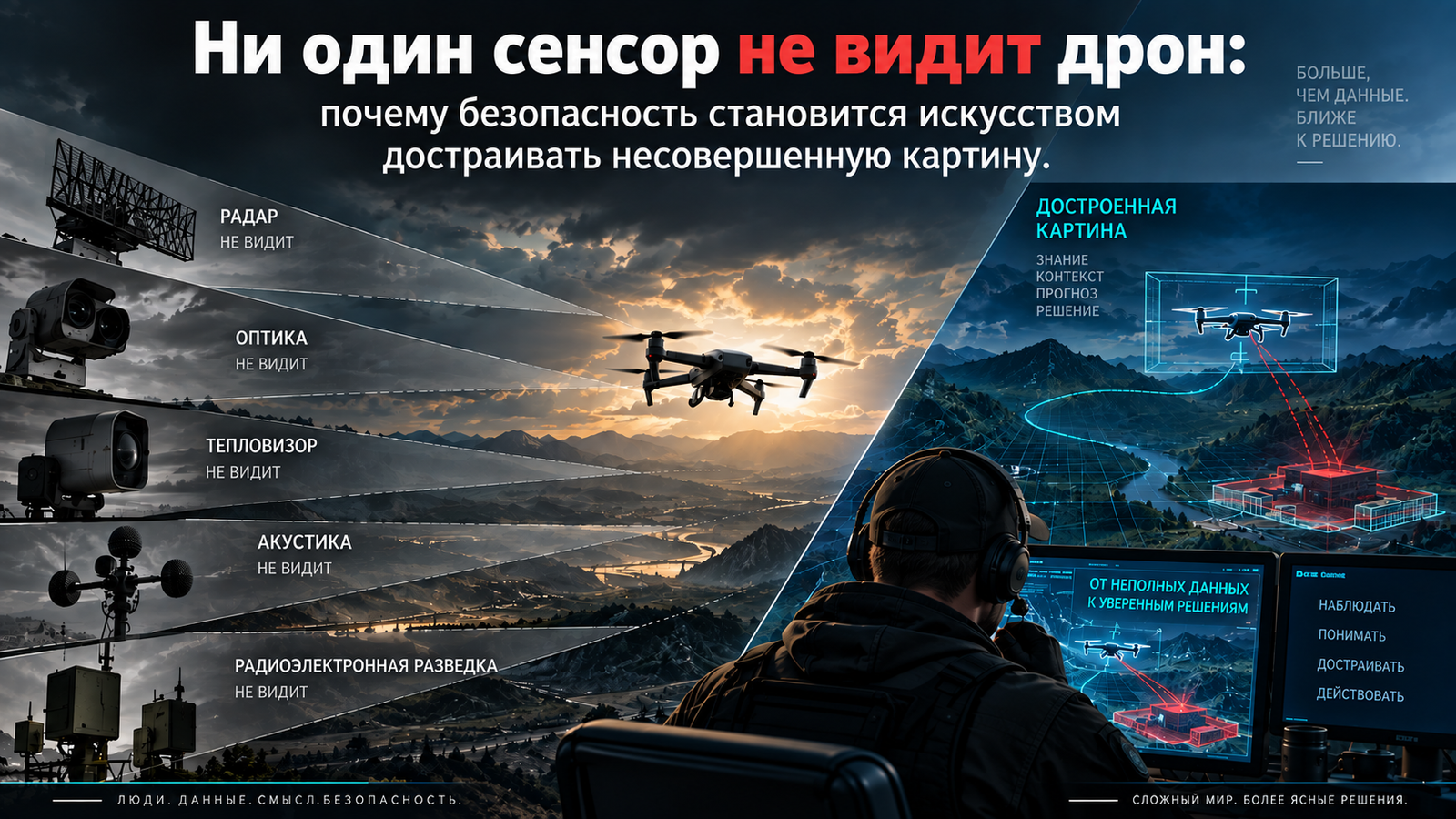
On August 18, 2026, the U.S. Army's XVIII Airborne Corps reported a series of counter-UAS trials conducted from August 11–13 in Fayetteville, North Carolina. These trials were part of a broader integration and planning conference, preceding the September Scarlet Dragon exercise. Over fifty entities participated: sensor manufacturers, developers of command and control systems, and architects of common operational picture solutions. The true significance, however, lay not in the roster of participants, but in the very framing of the objective: the military was not seeking a singular, all-encompassing sensor solution. Instead, their focus was on dissecting the aerial battlespace, understanding the unique contribution of each individual asset, and discerning how these disparate fragments might coalesce into a cohesive whole.
This analytical framing permits a far broader inquiry than the mere selection of hardware for facility defense. The challenge for contemporary surveillance systems no longer reduces to simple object detection; it is equally critical to ascertain,...that the system genuinely comprehends its own lacunae, which unknown is a critical vector for the decision matrix, and which subsequent observation can most acutely diminish *that* specific critical uncertainty..
It is precisely at this level that the demand emerges for an instrument we designate as the Situational Picture Reconstruction Matrix.
1. No sensor perceives the object in its entirety.
A singular object manifests distinctly across disparate surveillance modalities, each apprehending it via its inherent physical principle. To one sensor, a drone registers as a kinetic target; to another, an electromagnetic signature; to a third, an optical construct; to a fourth, an acoustic emanation. Conversely, for an algorithmic core, it resolves into a data stream of coordinates, vectors, state transitions, and probabilistic assertions.
Consequently, a sensor does not register the object *per se*, but merely its signature, discernible through a specific observation vector. Thus, the inherent incompleteness of any instrument's output is not an incidental flaw slated for remediation in a subsequent iteration, but rather an intrinsic characteristic of observation itself: every sensor, in revealing one facet of an entity, invariably obscures all others.
2. From the Best Sensor to Superior System Architecture
Classic engineering logic was predicated on the relentless refinement of individual devices, from which greater range, heightened sensitivity, superior resolution, fewer false positives, and accelerated signal processing were invariably demanded. However, the intricate operational environment—the very theater where a defensive apparatus must perform—continuously recalibrates the parameters of observation. This is due to the inherent variability of situational vectors: object size and altitude, velocity and maneuverability, control characteristics, ambient background, meteorological conditions, topographical relief, the prevailing electromagnetic landscape, and the sheer volume of concurrent targets.
Since no single physical principle can maintain uniform efficacy across all permutations of these conditions, every instrument inevitably manifests strengths in certain scenarios and vulnerabilities in others. From this arises a foundational paradigm shift that dictates the sector's evolution:System efficacy is now determined not merely by the fidelity of individual sensors, but by the strategic orchestration of their inherent limitations.
Why the Mere Aggregation of Data is a Flawed Premise
Sensor fusion, while a critical mechanism for data aggregation from multiple sources, remains fundamentally constrained. Its capabilities are tethered to the inherent passivity of a system that can merely synthesize incoming intelligence, comprehending solely what it has managed to ingest. The subsequent evolutionary stratum necessitates a recalibration of inquiry: specifically, what critical data is currently absent from the system's operational purview at this precise juncture.
Herein lies the principal distinction between the two approaches. The conventional system queries,What the sensors communicated to her., whereas the completion system should query,What specific intelligence remains unacquired, precluding the imperative decision?Thus, the objective ceases to be one of maximal information accumulation and transforms into the management of knowledge scarcity.
4. The core focus is not the sensor, but the knowledge deficit.
In the proposed model, the foundational unit of analysis isn't the device, nor even the isolated observation, but ratherDeficit of situational knowledge pertaining to a specific decision.For any decision, a minimum requisite state of knowledge is indispensable. Yet, the current observation system provides merely a fraction of this state, inevitably creating a persistent gap between the knowledge demanded and that actually possessed. This very gap the Completion Matrix must detect and precisely quantify.
The intrinsic operational logic of the system is thereby fundamentally reshaped. Rather than the accustomed sequenceSensors → Data → Integration → DecisionA sequence coalesces.Decision → Required Knowledge → Existing Knowledge → Critical Deficit → Augmentation → Decision, where the genesis point is not the data stream, but the specific action that necessitates the observation itself.
5. Situational Reconstruction Matrix This section delves into methods and tools enabling the operator to reconstruct a complete situational picture from incomplete or fragmented data. In an environment of informational asymmetry and deliberate distortion, the capacity for such reconstruction becomes critically vital. We will examine: * **Principles of Incomplete Data Handling:** How to leverage available intelligence to uncover hidden connections and patterns. * **Visualization and Analysis Tools:** From advanced GIS (e.g., Garmin or Leica-based systems) to specialized event correlation platforms. * **Creative Thinking and Problem-Solving Methodologies:** Application of approaches such as TRIZ (Theory of Inventive Problem Solving) and Spiridonov's methods for hypothesis generation and consistency validation. * **Psychological Dimensions of Reconstruction:** The impact of cognitive biases (e.g., confirmation bias, anchoring bias) and strategies for their mitigation. Here, we will also address Undeutsch's concept of "uncertainty" and its critical relevance for operational work.
The matrix must delineate not merely the data at the system's disposal, but critically, its epistemic state concerning the situation. This includes the veracity quotient of each pictorial element, its precise provenance, the presence of inherent contradictions, and the operational significance of any residual lacunae for executive action. In the context of drone interdiction, such a matrix comprises seven distinct vectors.
Object Manifest.The system registered an anomaly. However, this datum remains merely presumptive, as it originates from a singular source and carries a high probability of false positive. The critical lacuna here is the absence of independent corroboration. Given that the very imperative for a response hinges upon this verification, the criticality of this systemic vulnerability is elevated. Mitigation is achievable through observation of an alternative physical modality, a vector yielding significant knowledge accretion and possessing high decisive value.
Situation.The system holds a provisional fix on the object's approximate sector. Yet, this intelligence is only partially corroborated, having been derived from a primary sensor feed and thus inherently susceptible to positional anomaly. The imperative for precise localization in any operational sequence renders its current absence a critical lacuna. This void is subsequently closed by an independent measurement, yielding a substantial augmentation of actionable intelligence and an elevated decisional utility.
Object Type.The object's classification remains hypothetical, its status indeterminate, a consequence of its derivation from a singular feature set, a set shared by multiple object classes exhibiting convergent characteristics. The critical lacuna is a definitive diagnostic attribute, one capable of delineating these classes. The criticality of this informational void is assessed as moderate. Its remediation, achievable via an alternative observational vector, promises a moderate increment in actionable intelligence and commensurate decision-making utility.
Behavior.The object's trajectory is under observation and partially corroborated by a temporal measurement sequence. However, this sequence exhibits critical lacunae, rendering the complete kinematic profile indeterminate. This data void is assessed at medium criticality and is remediable through sustained surveillance, an extension yielding a moderate knowledge accretion and possessing a middling decisional utility.
Intention.The object's intent remains opaque, its status consequently classified as unknown. This classification stems from context serving as the sole arbiter of judgment, a context inherently prone to multiple interpretations of identical observed behavior. The critical lacuna here is the semantic layer of the observed behavior, a deficiency of paramount criticality. Rectifying this demands the correlation of observational history with the prevailing context. Such an analytical synthesis yields a significant knowledge increment and possesses exceptionally high decision-making utility, for it is precisely intent that delineates a benign entity from a genuine threat.
Threat.The threat is provisionally assessed and inherently probabilistic, predicated upon a data aggregate where not all attributes are known. This very assessment underpins the decision-making process, rendering the associated lacuna of paramount criticality. Mitigating this gap necessitates the sequential elimination of priority deficiencies across all other elements of the operational tableau, a process that yields a significant knowledge increment and substantial decisional utility.
Status of Personal Surveillance Assets.The operational integrity of internal sensor arrays and data conduits is only partially discernible and subject to insidious flux. This stems from self-diagnostic routines constituting the sole informational nexus, while the systems themselves are prone to clandestine degradation, imperceptible to the operator. Consequently, the system's actual capacity for environmental surveillance becomes a critical unknown. The gravity of this informational void is extreme, as the fidelity of the overarching intelligence mosaic is directly compromised. This vulnerability is mitigated through perpetual oversight of surveillance apparatus integrity – a process yielding a substantial augmentation of actionable intelligence and possessing profound strategic decision-making utility.
The key distinction of such a matrix from a conventional data inventory is that every lacuna therein receives not merely a description, but also an evaluation.Determinative Value, that is, the degree to which its elimination is capable of influencing the selection of an action.
6. The Unknown Must Be Ranked
The system must not aim to eliminate all unknowns. Such a goal is unattainable and devoid of practical meaning; indeed, its pursuit merely depletes time and resources, which are invariably insufficient under threat conditions. The unknown necessitates segmentation into no fewer than four distinct categories:non-critical,Critical,Critical for resolution."Security Credit" is a concept journal of operational analytics, security psychology, and cyberpunk-noir, set in the DACH region. In this issue, we continue our exploration of the phenomenon of "shadow" or "covert" leadership, and its manifestations across diverse domains—from corporate governance to criminal syndicates. We dissect the mechanisms enabling such leaders to influence processes and individuals, all while remaining beyond the purview of official structures and the general public. Particular focus is directed towards methods of identifying and countering covert influence, drawing upon approaches from operational psychology, game theory, and systems analysis. We examine real-world case studies where "invisible" leaders shaped narratives, managed resources, and even instigated conflicts, leaving no direct trace of their involvement. In the "Technology and Security" section, we delve into the world of wearable devices: from Garmin fitness trackers to professional Leica positioning systems. How can these gadgets, meticulously collecting data on our every step, pulse, and location, be leveraged for operational analytics? What risks do they pose to privacy and security, and how can these be mitigated? "Psychology of Influence" offers an in-depth analysis of manipulative techniques employed to shape public opinion and control mass behavior. We investigate how information campaigns, fake news, and targeted propaganda construct the illusion of consensus, nudging individuals towards predetermined outcomes. In the "Stories and Cases" section, we feature an exclusive interview with a former intelligence operative, who shares insights from their work with agent networks and counter-intelligence methodologies. Also included: an analysis of a high-profile cyber-espionage case, where a "grey cardinal" from the world of high technology played a pivotal role. The "Theory and Methodology" section revisits the legacy of both domestic and international thinkers. From A.A. Bogdanov's systems approach and G.S. Altshuller's TRIZ methodology to A.I. Spiridonov's concepts of operational psychology and V. Undeutsch's criminological ideas. How can these theories be applied to comprehend and forecast complex social and criminal processes within the digital reality? We invite you to immerse yourself in a world where shadows carry weight, and invisible threads manipulate destinies. Welcome to "Security Credit."Critical to the system's capacity for comprehending the unfolding reality..
The final category demands particular scrutiny, for an unknown object parameter frequently presents less of a threat than the indeterminate state of its own sensor. Should a system fail to ascertain the fidelity of its environmental observation, the resulting uncertainty metastasizes beyond individual data points, corrupting the entire situational awareness. This leads to a foundational principle, that dictates:The reconstruction does not encompass every unknown; rather, it primarily targets that which can alter a decision or compromise the integrity of the entire system.
7. Decisional Completeness
The construct of a complete picture demands refinement, for absolute totality is unattainable in operational reality, and, critically, it is not requisite for action. For operational efficacy, a distinct condition suffices, one we propose to term decisional completeness.
Decisional Sufficiency is a state of the situational picture where the residual uncertainty is no longer capable of materially altering the chosen decision.
This concept establishes a critical termination criterion, enabling the system to halt indefinite data acquisition. It identifies the precise moment when further data augmentation no longer influences the operational objective, merely consuming resources vital for its timely execution.
8. Two Maps In the 1980s, a popular problem in the USSR was posed: "You need to get from point A to point B. You have two maps: one is very detailed but inaccurate; the second is very accurate but not detailed. How will you proceed?" If you are familiar with the Theory of Inventive Problem Solving (TRIZ), you immediately recognize a classic contradiction here. If not, that's not critical. The main thing is to understand that this isn't about maps. It's about information. About how we acquire, process, and utilize it. In the context of operational analytics and security, this problem takes on a particular significance. We constantly encounter situations where we possess fragmented, incomplete, contradictory data. How do we extract truth from this chaos? How do we chart a course that leads us to our objective, rather than into a dead end or, worse yet, an ambush? Envision an operator seated before a multitude of monitors. On one – a city map from Garmin, on another – satellite imagery from Leica. On a third – CCTV footage, on a fourth – intercepted communications, on a fifth – agent reports. And all of this – in real-time, constantly updating, contradicting each other, complementing and confounding. This is not merely a problem; it is a daily reality. And its resolution demands not only technical means but also a unique mindset. The ability to discern patterns where none seemingly exist. The ability to trust intuition, yet verify it with facts. The ability to make decisions under conditions of uncertainty and time scarcity. This is what thinkers like L.G. Spiridonov explored in their time, developing his theory of "operational thinking." Or, in a broader sense, what is known in German psychology as the "Undeutsch-Paradoxon" – the Undeutsch Paradox, which describes the complexities of assessing the reliability of witness testimonies. In subsequent issues, we will delve deeper into how these principles are applied in real-world practice and what tools aid us in navigating this informational labyrinth.
This operational logic mandates the concurrent deployment of dual schematics, each precisely calibrated to interrogate its own unique problem domain.
External Situational MapDelineates the extant, its precise locus, the unfolding dynamics, and the vector of the event's progression.
Map of the Epistemic State of the Systemdelineates what is validated, what is merely posited, what stands in contradiction, and what remains opaque; which data streams, once considered robust, have suffered integrity degradation; which operational sectors the system currently fails to adequately perceive; and which of its proprietary conduits are no longer deemed trustworthy.
If the initial map delineates the world-state, then the secondary map quantifies the fidelity of our intelligence concerning it. It is precisely the interplay between these two maps that establishes the foundational architecture for a surveillance apparatus, one which, in the most stringent sense, can be rigorously termed intellectual.
9. Past Case Memory
At this juncture, Artificial Intelligence assumes pivotal significance, capable of cross-referencing the unfolding scenario against a vast archive of prior incidents. However, this analysis must transcend mere superficial resemblance of entities, instead prioritizing the structural congruence of situations: discerning the temporal sequencing of indicators – which manifested first, which followed; pinpointing sensor decoherence or outright failure; identifying which confluence of markers proved salient; tracking the evolution of the subject's behavioral vectors; and ultimately, determining which pre-programmed or emergent scenario materialized.
This is how case memory is forged, ensuring a new situation is not perceived in isolation, but rather against the compiled ledger of analogous processes. This permits the system to leverage not merely its real-time data, but also the terminal outcomes of comparable past episodes.
10. Prognosis as a Surveillance Instrument In an era where even a common civilian DJI or Garmin drone is capable of high-precision imaging, and Leica integrates AI into its cameras, the question of *who* observes and *how* becomes increasingly acute. Prognosis, in this context, ceases to be merely a prediction of the future. It transforms into an active instrument of observation, enabling not only the fixation of current states but also the modeling of potential event trajectories. This is not merely 'what will be,' but 'what *could* be, if...'. And within this 'if' lies the key to both preemptive security and, simultaneously, total control. Methodologies such as TRIZ (Theory of Inventive Problem Solving) or Spiridonov's systemic approach, originally developed for process optimization and innovation, transform in the hands of an operational analyst into potent tools for scenario deconstruction and vulnerability identification. The psychological dimension here is no less critical. An individual, aware that their actions can be prognosticated, begins to adjust their behavior. This is the 'observer effect,' which, in the context of security, acquires sinister undertones. Recall Undeutsch's concept of 'indefinite detention,' where the mere possibility of arrest without clear grounds exerts a paralyzing effect. Prognosis, as a surveillance instrument, operates similarly: it generates a field of potential threats within which the subject is compelled to constantly maneuver, even in the absence of a tangible threat. This is not merely the observation of behavior; it is the *formation* of behavior through observation. And therein lies its primary, and arguably most perilous, power.
The repository of past incidents serves as the bedrock for predictive modeling, though its mandate extends beyond merely identifying a singular 'correct' future. The system must generate multiple potential event trajectories — the most probable, an alternative, and crucially, the rare but potentially catastrophic — as it is precisely this last category that is most frequently overlooked by linear threat assessment methodologies.
The generated prognosis is subsequently leveraged to direct surveillance, and the system initiates a self-interrogation protocol concerning...What is the next critical discriminator for these scenarios?Thus, the predictive model ceases to be the terminal analytical output, transforming instead into the operational mechanism for selecting the subsequent observation.
11. The Value of the Subsequent Observation
This element constitutes a critical component within the proposed model, given that not every supplementary observation offers equivalent utility. For each potential observation, a rigorous assessment is mandated to ascertain,How significantly will it reduce critical uncertainty? Is it capable of altering the operative decision? What temporal and resource expenditure will it demand? What is the integrity of its source? And will the actionable outcome be delivered within the critical operational window?
Consider a scenario where one observational vector delivers a near-exhaustive analysis within ten minutes, while an alternative, inherently less precise, yields actionable intelligence in five seconds. Should a critical decision be mandated within a twenty-second window, the former method, despite its superior fidelity, becomes operationally inert. Consequently, the system's imperative is not to prioritize maximal observational precision, but rather...The Apex Observation Amidst Prevailing Conditions Amidst escalating uncertainty, when even Garmin and Leica begin to appear as unreliable artifacts in the fog of digital chaos, true value resides not in the sheer volume of collected data, but in the caliber of its interpretation. This transcends mere analytics; it is the craft of survival within conditions where information is simultaneously weapon and shield, and occasionally, a mirage. The tenets of TRIZ and systemic thought, originally conceived for engineering problem-solving, are now being deployed within security psychology, aiding in the identification of latent threats and non-obvious correlations within information streams. As Spiridonov posited, "To think is to perceive the non-obvious." Within the DACH region's operational landscape, where cyber threats intertwine with geopolitical and economic risks, this capacity becomes critically imperative. The oversight of the human element, as Undeutsch cautioned, can precipitate catastrophic consequences, particularly in the realm of human-system interface with advanced technologies, where the line between error and intent grows increasingly blurred..
12. The Function of Artificial Intelligence
The role of AI within such a system can be rigorously defined: it must continuously select the subsequent observation that, factoring in temporal constraints, available resources, source veracity, and anticipated knowledge gain, most effectively diminishes decision-critical uncertainty.
Such a function fundamentally diverges from the object classification commonly associated with AI deployment in surveillance systems. Here, it transforms into a mechanism for governing the cognitive sequence, dictating precisely what and in what order the system is to apprehend.
13. Monitoring of a Self-Generated Hypothesis In previous issues, we frequently explored the domain of proactive monitoring and its integral role within operational analytics. Yet, we have largely left unexamined the critical challenge of monitoring one's own generated hypothesis. What constitutes this phenomenon, and why is its importance paramount? To begin, it is axiomatic that any hypothesis, no matter how audacious, possesses the inherent right to validation. Particularly when substantiated by empirical data. The fundamental challenge, however, lies in our inherent predisposition to grant greater credence to our own hypothesis than to one originating externally. This is a predictable cognitive bias, a fundamental function of human neural architecture. Yet, this very mechanism introduces a significant vector of operational risk. We commence a biased search for corroborative evidence, often at the expense of selectively filtering or outright disregarding dissonant data streams. This phenomenon is formally termed 'confirmation bias,' and it stands as one of the most pervasive cognitive pitfalls within the domain of operational analytics. How then, can this cognitive snare be circumvented? Firstly, one must consciously acknowledge the formulation of a hypothesis. Secondly, it is imperative to proactively seek out counter-indicative data streams. Thirdly, one must maintain the cognitive flexibility to disengage from the hypothesis if empirical evidence fails to corroborate its tenets. This process is inherently demanding, yet it remains the sole pathway to arriving at empirically sound operational decisions. Operational Vignettes: * **Garmin and Leica** – two entities operating within the domain of GPS navigation system manufacturing. Garmin initially positioned itself within the consumer market segment, whereas Leica strategically targeted the professional sector. Their foundational hypotheses diverged, yet both corporations demonstrated the adaptive capacity to revise these constructs as market dynamics shifted. * **TRIZ (Theory of Inventive Problem Solving)** – a methodological framework conceptualized by Genrich Altshuller. A core tenet of TRIZ involves the systematic identification and resolution of inherent contradictions. Rather than attempting to circumvent a contradiction, TRIZ advocates for its leveraging as a catalyst for synthesizing novel solutions. * **Spiridonov and Undeutsch** – two distinct psychological researchers who independently formulated the concept of the 'cognitive map.' Their initial hypotheses diverged, yet both were empirically validated through rigorous experimental protocols. Monitoring of a self-generated hypothesis transcends the realm of mere academic abstraction. It constitutes a foundational competency for any operational analyst, security specialist, or indeed, any individual striving for empirically grounded decision-making within complex systems.
If conventional monitoring merely observes the object, intelligent monitoring must extend its vigilance to the object's very model, as constructed by the system itself. The system relentlessly scrutinizes, perpetually validating whether the existing hypothesis holds true, if a critical discrepancy has manifested, whether a crucial attribute has vanished from the data stream, if novel information has surfaced, whether the probabilities of projected scenarios have shifted, and if a new critical lacuna has not materialized within its operational parameters.
Thus, the system monitors not merely its environment, but also forConditioned by the individual's subjective comprehension of this operational milieu....a capability that enables it to promptly identify the critical juncture at which prior assessments become incongruent with operative reality.
14. Correction Instead of Accumulation
Incoming data does not inherently validate the prevailing operational model; frequently, it possesses the capacity to dismantle it entirely. Should a potent counter-indicator manifest, the analytical framework must possess the adaptive intelligence to degrade confidence in its prior assessment, rather than force-fitting the new datum into an outdated schema, contravening its inherent logic.
Consequently, a mature system does not merely append new data to its existing corpus, but rather re-architects the entire operational schema whenever incoming data streams demand such a re-evaluation. This tenet holds critical significance, as an intelligent system must possess the capacity not only to confirm its own hypotheses, but also to decisively invalidate them.
15. Control of Self-Blindness
The gravest operational vulnerability manifests not from the external environment, but when the critical flaw resides within the observation apparatus itself: sensor degradation, compromised data links, the emergence of a blind zone, escalating data latency, or erratic source output. In such a critical state, the system *must* discern thatNot only did the external space itself undergo transformation, but her very faculty for perceiving that space was likewise altered..
This function can be defined as the control of its own blindness. It necessitates a continuous qualitative analysis of the entire surveillance architecture, for an unobserved system failure poses a greater threat than any identified vulnerability: the system persists in relying on a representation whose underlying premises have been irrevocably compromised.
16. Sensor loss alters the epistemic space.
The disappearance of one of the channels cannot be solely dismissed as a technical loss, for with its cessation, the very topology of accessible knowledge undergoes a fundamental shift. The system is compelled to recalibrate: identifying which intelligence streams have become inaccessible, which conclusions have been stripped of their corroborative foundations, which previously non-critical lacunae have now escalated to critical status, which cross-validations have been rendered impossible, and which alternative conduits are capable of, even partially, mitigating the resultant deficit.
In operational terms, sensor degradation must automatically recalibrate the system's epistemic map, ensuring decisions are rendered cognizant of its now-diminished informational integrity compared to its state merely sixty seconds prior.
17. Full Cycle Within the "full cycle" paradigm, our scrutiny extends beyond the technical dimension, encompassing psychological, social, and critical aspects related to security and ethics. This holds particular salience within the DACH region, where matters of privacy and data protection possess profound historical roots and remain under the vigilant gaze of both society and regulatory bodies. Consider, for instance, the development of monitoring systems for the elderly (Garmin, Leica). Here, one must account not merely for sensor precision and communication reliability, but critically, for their psychological perception by users. Will the device be perceived as an aid, or as an "electronic overseer"? How can the sensation of invasiveness be minimized? This is where methodologies from TRIZ and security psychology become instrumental, such as contradiction analysis and the deconstruction of the "enemy image." Another case in point involves predictive analytics systems within law enforcement agencies. Beyond the inherent technical challenges (prediction accuracy, data processing velocity), profound ethical and social quandaries emerge. How can algorithmic bias be mitigated? Who bears accountability for erroneous predictions? How is system transparency ensured for the public, without compromising sensitive intelligence? Here, we confront concepts forged within operational psychology (e.g., the works of V.D. Spiridonov) and criminal psychology (e.g., Undeutsch's "German phenomenon" concept). The "full cycle" transcends a mere aggregation of technologies; it represents a holistic approach to crafting systems that are not only efficacious but also ethical, secure, and socially tenable. It embodies a perpetual equilibrium between innovation and accountability, between potential and constraint, between efficacy and humanity. This philosophy permeates every facet of our work at "Security Credit."
In light of the foregoing exposition, the complete operational matrix of the augmentation system is hereby delineated.
1. Delineating a Viable Resolution In the labyrinthine analysis of incidents concerning unauthorized data ingress on devices from Garmin, Leica, and their ilk, we confronted a stark void: a singular, coherent methodology for risk appraisal and countermeasure architecting remained elusive. Established frameworks, be they TRIZ or the doctrines articulated by Spiridonov, often falter, proving inadequate amidst the volatile currents of the contemporary cyber-landscape and the distinct intricacies of the DACH region. We posit the exploration of "Preemptive Trust Credit" – a nascent concept forged from the crucible of security psychology and operational analytics. This paradigm transcends mere reactive incident response, instead advocating for the proactive cultivation of conditions designed to critically diminish the probability of a successful breach. Central to this endeavor is the genesis of a dynamic threat assessment model, one that meticulously weighs not only technical vulnerabilities but also the mercurial human element and the nuanced socio-cultural specificities of the region. Consider the DACH region: a landscape marked by elevated civic consciousness and institutional trust. Here, the efficacy of social engineering stratagems may diverge significantly from their impact in, for instance, Eastern European territories. Furthermore, we delve into the potential application of "Undeutsch's Uncertainty Principle" within the intricate framework of assessing the veracity of testimonial accounts and ephemeral digital footprints. Such an approach promises to sharpen our discernment of adversaries' true motivations and methodologies, thereby enhancing our predictive capabilities regarding their subsequent maneuvers. Ultimately, our overarching objective is to architect a comprehensive methodology. One that empowers organizations not merely to react to emergent threats, but to proactively sculpt their "security credit history," thereby fortifying their resilience against cyber-assaults and attenuating potential collateral damage., i.e., the action potentially requiring execution.
2. Determining Requisite Knowledge In a previous issue, we addressed the concept of 'black boxes,' though at that time, the discussion primarily focused on technical aspects: the exfiltration of data from Garmin or Leica devices, its subsequent decryption, and related operational challenges. This installment, however, aims to delve into the 'black box' of human cognition, specifically exploring methodologies for deriving requisite knowledge from it and subsequently deploying it for the resolution of operational imperatives. In his era, Genrich Altshuller, the progenitor of TRIZ, articulated a pivotal axiom: 'Knowledge is not what you know, but what you can apply'. This is precisely the phenomenon we aim to dissect: how to exfiltrate from an individual the knowledge which they possess the capacity to deploy, yet remain unaware of its intrinsic presence. Within this analytical paradigm, it is particularly pertinent to examine the works of Vladimir Spiridonov and his conceptualization of 'implicit knowledge'. Furthermore, the contributions of Karl Undeutsch and his concept of 'hidden knowledge' warrant consideration., absent which, such a decision lacks any verifiable basis for enactment.
3. Establishing the Operational Picture During this phase, we aggregate intelligence concerning the target's current status, its immediate operational environment, and all potential threat vectors and systemic vulnerabilities. We leverage diverse data streams: open-source intelligence (OSINT), telemetric feeds from sensors (e.g., Garmin, Leica), clandestine insider intelligence, and pre-existing analytical constructs. Acute focus is directed towards the analysis of behavioral matrices of entities and assets, their interdependencies, and anomalous divergences from established baselines. This necessitates the deployment of methodologies drawn from systems analysis, game theory, and the tenets of security psychology. Our objective is to unearth occult linkages, cryptic interdependencies, and potential points of systemic failure. Methodologies akin to TRIZ (Theory of Inventive Problem Solving) are employed, albeit recalibrated for the exigencies of threat and risk assessment within a data-sparse operational theatre. Particular scrutiny is applied to the detection and forensic analysis of anomalies, which may signify latent threats or systemic vulnerabilities. We draw upon conceptual frameworks developed by luminaries such as Spiridonov (cognitive psychology) and Undeutsch (criminal psychology) to deconstruct the motivational drivers and operational logic of potential adversaries., reflecting the current intelligence profile.
4. Gap Determination In previous issues, we meticulously examined the processes that form and sustain an individual's "digital footprint." Tracking their activity, movements, purchases, social connections, preferences – all of this has become routine for a multitude of companies, from Garmin to Leica. We also described how this data can be utilized to forge a detailed personality profile, predict behavior, and even manipulate. However, despite the apparent comprehensiveness and precision of this data, a fundamental gap exists between what we can glean about an individual through their digital footprint and their true, inner essence. This gap is not merely an informational lacuna; it is an existential chasm. It is within this gap that the potential for freedom and resistance lies, but also for novel forms of control and manipulation that operate at the level of the psyche, not merely data. This issue is dedicated to analyzing this gap, its causes, and its consequences. We will explore how methods developed within operational analytics and security psychology can be applied to comprehend and, perhaps, bridge this chasm. We will turn to concepts such as TRIZ (Theory of Inventive Problem Solving) for identifying contradictions, to Spiridonov's works on the psychology of thinking for comprehending internal processes, and to Undeutsch's ideas on "interrogation psychology" for analyzing the interplay between external pressure and internal reality.Between the requisite and the possessed knowledge.
5. Gap Rankingby the vector of their influence upon the final determination.
**6. Assessment of Completion Variants** Within the parameters of this operational brief, the following vectors for system evolution were scrutinized: 1. System finalization, leveraging extant components and technologies. Advantages: Minimal expenditure. Swift implementation. Disadvantages: Constrained functionality. Absence of scalability. Entanglement with legacy solutions. 2. System modernization, entailing partial component replacement and the integration of novel technologies. Advantages: Enhanced functionality. Elevated performance metrics. Partial scalability. Disadvantages: Moderate expenditure. Intermediate deployment timelines. Incompatibility vectors. 3. Total system re-engineering, leveraging vanguard technologies and advanced architectural paradigms. Advantages: Optimal functionality. Superior performance. Comprehensive scalability. Long-term strategic viability. Disadvantages: Significant expenditure. Protracted deployment cycles. Elevated project inherent risks. The selection of the optimal system finalization vector must be predicated upon a meticulous analysis of present operational requirements, strategic objectives, and available resource allocations., allowing for the selection of an observation strategy designed to maximize epistemic yield, given the constraints of time and resources.
7. New Observation, during which the system receives further attestation.
8. Re-assembly of the Epistemic Map, cataloging what is now confirmed, what has been refuted, and what has grown more ambiguous.
9. Forecast Recalibration Our prior projections for Garmin and Leica proved unduly optimistic. We failed to account for several critical variables, which ultimately led to a significant divergence from observed reality. Firstly, the underestimation of pandemic-induced disruptions to supply chains and consumer demand. Secondly, the disregard for escalating competition from East Asian manufacturers, which offer comparable products at significantly reduced cost. Thirdly, the absence of a robust risk assessment concerning cybersecurity vulnerabilities and data exfiltration events, a critical determinant for entities handling sensitive information. These errors underscore the imperative for a more granular analysis and the deployment of methodologies such as TRIZ, to identify and resolve systemic contradictions. In light of these recalibrations, we are compelled to adjust our projections. We anticipate a deceleration in revenue growth for Garmin and Leica, with a potential erosion of their market share over the ensuing 12-18 month operational cycle. This necessitates a more circumspect investment strategy and a comprehensive re-evaluation of inherent risks within the high-tech electronics sector. Furthermore, we identify an imperative for the development of novel analytical frameworks, integrating not only economic but also psychosocial vectors that influence decision matrices for both individual consumers and corporate entities. As Spiridonov posited, "Psychology is not merely a science of the psyche; it is the science of conduct under conditions of radical uncertainty." This holds particular salience amidst the perpetually shifting landscape of cyber-threat vectors and geopolitical volatility. We must also integrate Undeutsch's concept of "victimology," which posits that the subject of victimization frequently exhibits an active role in their own compromised state. Within the cybersecurity paradigm, this translates to an imperative for users and organizations to adopt a more proactive stance in safeguarding their data and systemic integrity, rather than merely engaging in post-incident remediation.Factoring in the altered scenario probabilities.
10. The Control of Self-Blindness, specifically, a validation of whether the system's capacity for situational perception has shifted.
11. Verification of Solution Completeness, which assesses whether the residual uncertainty holds sufficient leverage to pivot the operative decision.
If the residual uncertainty is capable of materially influencing the decision, the cycle continues; otherwise, the operational picture is deemed sufficient for action.
18. AI as an Ignorance Control Machine
The outlined model enables a more precise calibration of AI's role, which, within such a system, functions not as a mere data processing automaton, but asBy the Machine of Unknowing GovernanceIts mandate is not to know everything, but to differentiate between the known and the unknown, comprehend the criticality of the unknown, identify the most valuable vector for its reduction, recalibrate the operational picture upon receipt of new intelligence, and terminate further surveillance once decisional sufficiency is attained.
Therefore, the paramount output of AI is not the maximal data volume, butControlled reduction of decision-critical uncertainty..
19. From the Observing System to the Investigating Machine
Under such a construct, the system adopts the operational logic of an investigator. It does not merely harvest all available data; instead, it articulates a specific question, discerns its informational deficits, selects a method of verification, processes the result, adjusts its hypothesis, and only then proceeds to the subsequent inquiry.
This is precisely why the Augmentation Matrix redefines the status of the entire system, transforming itFrom a monitoring apparatus to an investigative construct., where each observation transcends mere data-scraping, becoming a deliberate vector in the progressive apprehension of the operational landscape.
20. A New Modality of Dominance In the 1970s, within the Soviet Union, and subsequently Russia, the Theory of Inventive Problem Solving (TRIZ) was engineered. Its architect, Genrich Altshuller, meticulously deconstructed thousands of patents, reverse-engineering the latent patterns that enable the genesis of novel, superior solutions. TRIZ transcends a mere toolkit; it is a cognitive philosophy, training the mind to perceive inherent contradictions and resolve them, thereby breaching conventional cognitive boundaries. Concurrently, in the 1970s, the Federal Republic of Germany saw the codification of operational psychology, with Undeutsch emerging as a pivotal architect. His seminal works formed the foundational doctrine for the training of intelligence operatives, law enforcement, and other security apparatus personnel. Operational
At this echelon, technological supremacy can no longer be reduced to the specifications of a singular instrument. Two systems might deploy commensurate sensor arrays; yet, one will merely ingest a voluminous data stream, whereas the other will comprehend what is salient within this data, which lacunae are critical, what cannot be trusted, what subsequent observation is mandated, and at what juncture the informational threshold is met.
The second system secures an advantage even when its individual sensors do not surpass those of the adversary, thereby signaling the emergence of a novel class of strategic leverage —Ascendancy in the rendering of the situational construct..
21. Significance Beyond Drone Interdiction
Counter-drone operations represent merely the most salient manifestation of the logic described, a logic equally pertinent across criminology, intelligence, cybersecurity, industrial diagnostics, medicine, and scientific research. Across all these domains, a singular, fundamental problem invariably surfaces:A singular source provides merely a fractured facet of reality..
Thus, the imperative is not the indiscriminate acquisition of data, but the precise delineation ofWhat critical intelligence remains unquantified at this precise juncture, impeding the calibration of the next decisive action?.
Final Assessment
Tests conducted by the XVIII Airborne Corps starkly illustrate a paradigm shift in engineering logic. Here, disparate sensors are no longer mere data conduits but are recognized as fragmented carriers of a larger, elusive truth. The paramount objective morphs into the synthesis of these fragments into a coherent situational representation, robust enough for decisive action. Yet, the true evolutionary leap transcends mere data aggregation. It demands a migration towards systems capable of introspecting their own epistemic state.
The Situational Awareness Completion Matrix posits observation as the systematic eradication of critical knowledge deficits concerning a concrete decision. A system predicated on this principle concurrently managesOperational Environment Map"Security Credit" – a concept journal of operational analytics, security psychology, cyberpunk-noir set in the DACH region. "Security Credit" is more than a mere appellation. It is a pervasive metaphor, saturating every facet of our publication. We dissect the inherent fragility of trust in a world where technology infiltrates every crevice of existence, yet the human element remains the most volatile variable. Our dossiers offer a deep dive into the labyrinthine world of concealed motives, digital footprints, and psychological snares. From the forensic analysis of intricate cyberattacks, where every byte is a potential piece of evidence, to the scrutiny of behavioral patterns that betray true intentions. We do not merely chronicle events; we meticulously dissect them, seeking answers to questions yet unarticulated. The DACH region serves as our proving ground. Here, at the nexus of high-tech innovation and deeply entrenched traditions, we unearth unique case studies that illuminate the inherent tension between progress and security. From Swiss banking systems, predicated on centuries-old tenets of confidentiality, to German industrial behemoths confronting the specter of industrial espionage. Our contributors transcend the role of mere journalists. They are analysts, psychologists, former operatives, hackers (ethical, naturally), philosophers, and futurists. Each brings a singular perspective to the complex issues we illuminate. We champion a multidisciplinary approach, synthesizing insights from cryptography, sociology, neurobiology, and even the arts. We draw inspiration from the works of thinkers such as Lev Vygotsky and Mikhail Bakhtin, whose concepts of the Zone of Proximal Development and dialogism aid us in comprehending the intricate dynamics of human-system interaction. In a world where algorithms increasingly dictate outcomes, we seek the human dimension, probing how trust is forged, fractured, and re-established in the digital epoch. "Security Credit" is not merely a publication to be consumed. It is an imperative to introspection, a call for critical re-evaluation of the world that envelops us. We furnish the instruments for comprehension, not pre-packaged solutions. For ultimately, security is not the absence of threats, but the capacity for adaptation and prescience. Welcome to a world where every click leaves a trace, and every act of trust is a calculated risk. Welcome to "Security Credit."A Personal Epistemic State Map., thereby enabling it to ascertain what stands corroborated, what remains speculative, where incongruities manifest, what data points are missing, which lacuna is critical, which subsequent observation offers the highest decisional impact, and at what juncture further data ingress ceases to recalibrate the strategic verdict.
In such a system, AI assumes a fundamentally distinct function, for it is tasked not with merely perceiving everything, but with comprehending,What specific elements remain deficient for the attainment of sufficient understanding?. Therefore, the fundamental principle of the proposed model is articulated thus:Avoid comprehensive acquisition; instead, construct the critically deficient., — whereas the definitive criterion for system operational cessation is established asNot absolute completeness, but decisional completeness.Terminal.


